Institute for Vital Gastronomy · Industry & R&D

A new ingredient is not yet a better product.

Vital Gastronomy helps R&D and product teams evaluate how ingredients, processing, and formulation shape flavour, texture, integrity, and whether people choose the product again.

Scroll
Where the product brief and the eating experience diverge
Many products are evaluated against the wrong mix of criteria. They pass development. They reach the market. And then they do not get chosen again.

A new ingredient is not yet a better product. Between the raw material and the second purchase lies a chain of decisions about processing, formulation, texture, and flavour. Most of those decisions are made without a shared framework for what they preserve or give away. Products get optimised for the launch metrics: stability, scalability, cost, panel acceptance. The sensory logic that drives repeat purchase comes last, and is the first thing that explains why a product loses the market. Vital Gastronomy gives R&D teams a framework for reasoning across those trade-offs.

What changes

A shared framework for what processing preserves, alters, and gives away

Click each to learn more.

Value Appraisal
See product quality holistically
KBCC
Understand processing as a value decision
CCL
Products that score higher on vitality, not just acceptance
Soil · System · Sense
Trace what the supply chain gives away

These four ideas belong to a wider framework. Read it in full →

The value journey

The number survives. The food does not.

One tomato, processed to a powder. Watch the structure and aroma break down while the figures on the nutrition label barely move. That gap is the value your label was never built to see.

NUTRITION LABEL ✓ Vitamin C ✓ Fibre ✓ Iron
skin, flesh, seeds, juice · the whole structure lost here · the fresh smell, boiled away lost here · the structure that held it the label still reads fine

Illustrative, not a measurement. The label tracks a handful of nutrients; the fruit carries hundreds of compounds.

  1. 01

    A whole, ripe tomato

    Skin, flesh, seeds, juice, and the structure that holds them together. The nutrition label captures a handful of this. The fruit carries far more.

  2. 02

    Cooked down to concentrate

    Water leaves, and so does most of the fresh smell, boiled away by the heat. The vitamin figure on the label barely moves. The smell of a ripe tomato does not survive the pan.

  3. 03

    Ground and dried into powder

    The cell walls break, the fibre is ground down, and the structure that slowed digestion and carried flavour is altered. What is left is a fine, shelf-stable dust that still tests well on paper.

  4. 04

    What ships in the sack

    The label still reads fine, because the measured nutrients survived. But those were never the whole of it, and the rest is everything the number was never built to see.

The measured nutrients came through almost unchanged. Most of what made it food did not.A tomato was never just a nutrient delivery device. Its fibre, natural plant compounds, aroma and structure are value in their own right, and the label counts almost none of it.

How we read a product

Same ingredient.
Four supply realities.
The KPIs your team defends every week.

A sun-ripened tomato from Spain, a canned San Marzano from southern Italy, a greenhouse tomato from the Netherlands, an open-field tomato from California's Central Valley: four viable answers to the same R&D brief. Read across eight dimensions a product team actually argues about, and the shapes diverge sharply. No option wins everywhere. The reading you choose depends on the values you make explicit.

Shelf life Cost efficiency Yield Claim strength Sensory score Clean label Low carbon Regulatory fit
Sun-ripened · Spain
Open-field, vine-ripened, harvested near peak. Strong sensory and clean-label profile. High claim strength built on origin and ripeness.Short shelf life · seasonal supply · water stress and labour conditions weigh on equity
Canned · Italy
San Marzano tradition, processed near the fields. Long shelf life, scalable cost, trusted heritage claim, category-defining cooked-tomato sensory.The can lining and how it is preserved raise clean-label and regulation questions
Greenhouse · Netherlands
Year-round, high-yield, clean-label, audit-friendly. The mainstay of European fresh supply.High energy use, still largely gas, is the main trade-off; taste and some beneficial compounds sit below field-grown
Open-field · California
Central Valley, industrial-scale, predominantly processing-grade. Highest yield and cost efficiency, strong clean-label, defensible carbon on open-field sun.Water risk and a migrant-labour visa system (H-2A) rarely show up on an ingredient spec
Click to compare · select multiple to overlay
Illustrative shapes. Real appraisal uses audited supply-chain data.
Worked example

A biologist running a one-room R&D lab for restaurants, brands, and a YouTube following
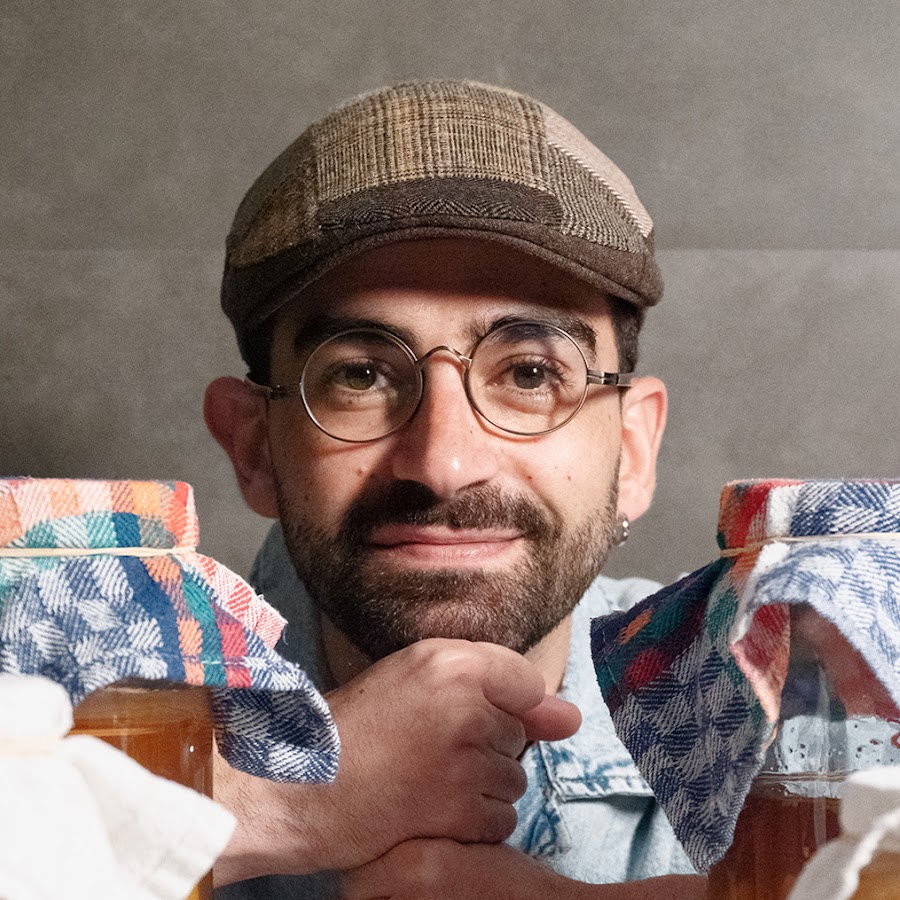
José de la Rosa Morón
Biologist · Fermented Freelance · Lecturer · Huelva

A biologist who runs Fermented Freelance from a 19m² lab in Huelva. He develops new ingredients with chefs, prototypes products with food brands, and runs workshops for food schools. He also teaches at five food schools from Madrid to Santiago, and posts as @fermentedfreelance on YouTube and Instagram.

Open full profile
Education Biologist (Andalusia) · Master in Gastronomic Sciences, Basque Culinary Center (2016–2018) Teaching Basque Culinary Center · Universidad de Cádiz · DUOC Chile · IED Madrid · Hotel Management School Madrid Recognition TEDx Reggio Emilia (2019) · Published, UOU Scientific Journal (2022) · Eroski–Basque Culinary Center Onenak Award (2022) · BCC 100 Young Talents (2024) Earlier role Head of Food Alchemist Lab, Future Food Institute, Bologna Clients El Celler de Can Roca · Grupo Peralada · WellDone Burger · Andalusian food producers Public reach Tens of thousands of followers as @fermentedfreelance on YouTube and Instagram
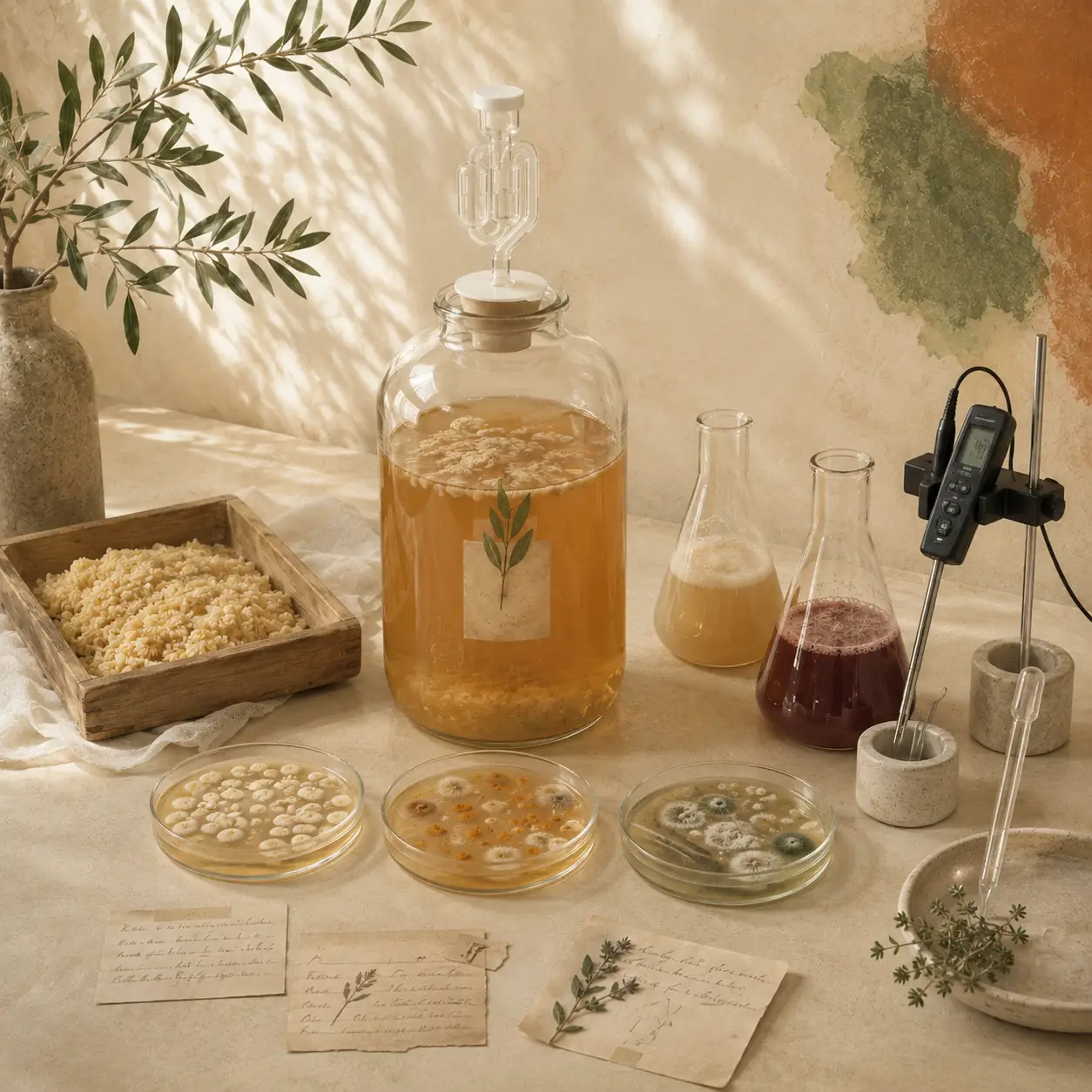
“Fermentation, like architecture, relies on the design of semi-isolated environments that facilitate certain kinds of life.” José de la Rosa Morón · UOU Scientific Journal · 2022
The process · expand each stage

How a one-person R&D lab does what large innovation teams often cannot

01 Read inherent value What an ingredient already carries, before it is touched. +
Forgotten and surplus raw materials examined for what they could become. Wild herbs from the Sierra de Aracena, native honeys, carob pods, dried figs, restaurant by-products. Before any technique is chosen, the ingredient is read: what compounds are already present, what could be unlocked, what direction would amplify the existing value instead of masking it.
02 A one-room lab that builds anything Koji, kombucha, miso, plant-based meats, native ferments. +
Each project lands on his bench with a client question and ends in a glass jar. Acorn miso. Kombucha programmes. Vegan chorizo. Koji on local pulses. Native fermentations on Andalusian fruits and grains. What a corporate R&D department might spend a year scoping, Fermented Freelance prototypes in weeks, often with a single ingredient and a clear question from the client.
03 From client briefs to public reach Restaurant kitchens, classrooms, and a public audience. +
Work that began in restaurant R&D now reaches further. Lectures at five institutions across Europe and Latin America (Basque Culinary Center, Universidad de Cádiz, DUOC Chile, IED Madrid, Hotel Management School Madrid). Through @fermentedfreelance on YouTube and Instagram he has become a fermentation voice with a public audience in the tens of thousands.
“Every processing step preserves something, alters something, and gives something away. Most product sheets only count the first.” Vital Gastronomy

Work out where quality is being lost before launch.

We work with R&D and product teams on novel ingredients, processing trade-offs, reformulation challenges, and why products that perform in development do not always convince in the market. Tell us what you are working on.

Discuss an industry application Read our research

Selected media and appearances →

Voices from the field
Michiel Bakker
“Vital Gastronomy is one of the important ideas for the future of food.”
Michiel Bakker · President, The Culinary Institute of America · Founder, Google Food Lab
Read the full endorsement →
José de la Rosa · Biologist, FermentedFreelance · fermentation science · lecturer at multiple universities
Sara Roversi · Founder, Future Food Institute · Bologna · San Francisco · Tokyo
Also connected through
T.A.S.T.E. Wageningen University Felan Innovations
See the full network →
Also relevant to
Talk to us→